


Soy Wax: The Sustainable Choice for Beautiful, Clean-Burning Candles

What Is Soy Wax and How Is It Made?
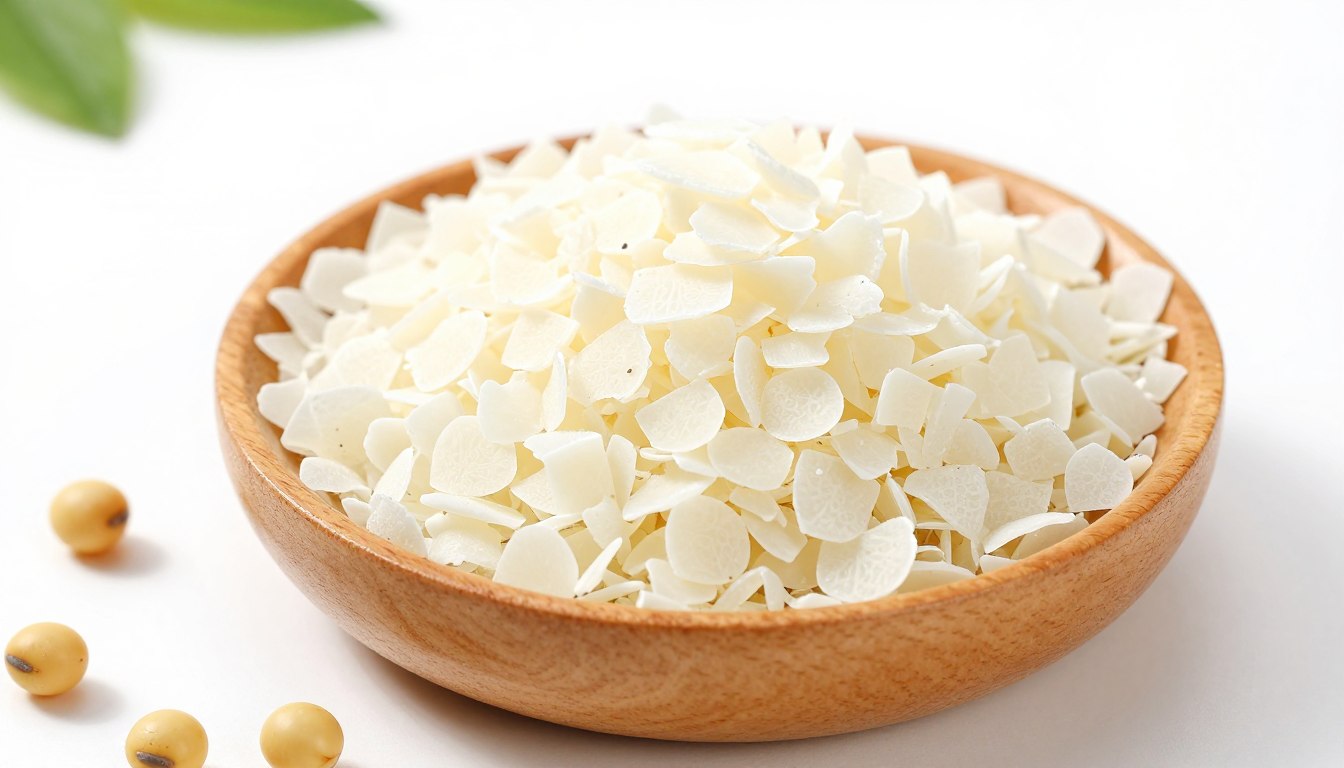
Pure soy wax flakes derived from soybeans
Soy wax is a natural, vegetable-based wax derived from soybean oil. The production process begins with harvesting soybeans, which are then cleaned, cracked, dehulled, and rolled into flakes. Oil is extracted from these flakes and undergoes hydrogenation – a process that breaks down the oil’s fatty acid chains and converts them into a solid form at room temperature.
This hydrogenation process transforms liquid soybean oil into a solid wax with a creamy, off-white appearance. The result is a 100% natural, biodegradable product that serves as an excellent alternative to petroleum-based paraffin wax. Most commercial soy wax is designed to have a melting point between 120-180°F (49-82°C), making it ideal for container candles.
“Soy wax is derived from soybeans, a renewable resource that is biodegradable. Using soy wax supports sustainable agriculture practices and reduces dependence on fossil fuels compared to petroleum-based waxes like paraffin.”
Properties and Benefits of Soy Wax
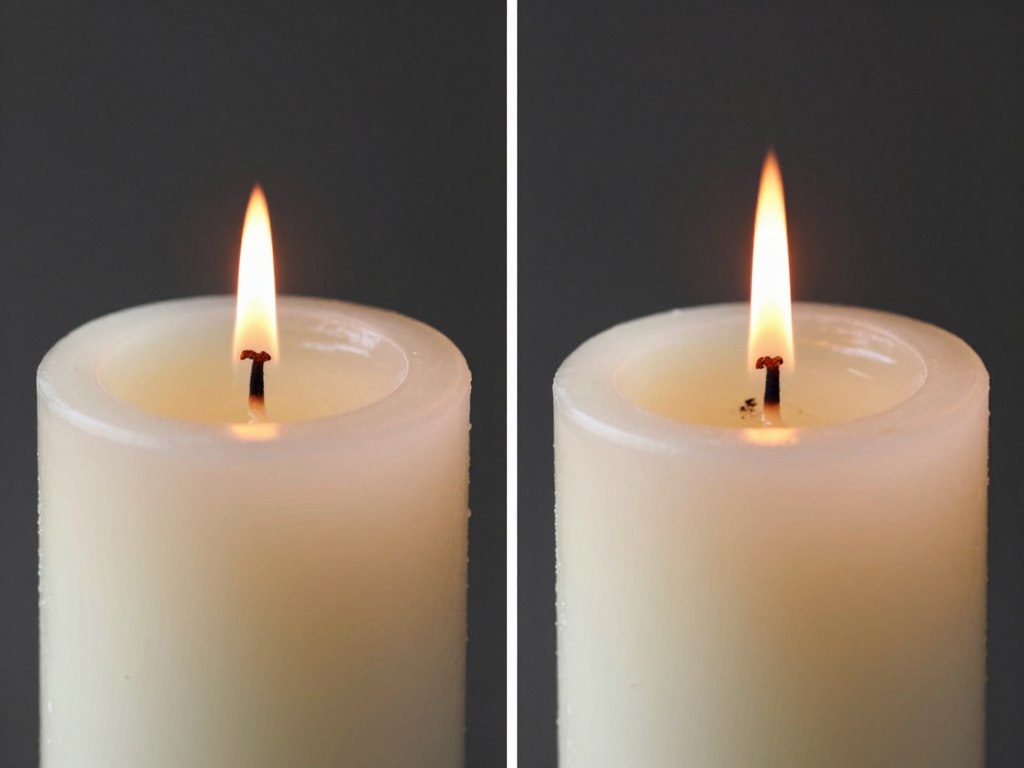
Soy wax candles (left) burn cleaner with less soot than paraffin candles (right)
Environmental Benefits
- Renewable Resource: Made from soybeans, which can be grown repeatedly, making it a sustainable choice.
- Biodegradable: Naturally breaks down in the environment, unlike petroleum-based alternatives.
- Carbon-Neutral: Soybeans absorb carbon dioxide during growth, offsetting emissions from candle burning.
- Supports Agriculture: Choosing soy wax supports soybean farmers and sustainable farming practices.
Performance Benefits
- Clean Burning: Produces significantly less soot than paraffin, promoting healthier indoor air quality.
- Longer Burn Time: Burns up to 30-50% longer than paraffin wax candles of the same size.
- Excellent Scent Throw: Absorbs and releases fragrance oils effectively for a stronger, more pleasant aroma.
- Lower Melting Point: Melts at a lower temperature, making it safer and easier to work with.
Ready to Experience the Benefits of Premium Soy Wax?
Our 100% pure soy wax flakes are perfect for creating clean-burning, long-lasting candles with excellent scent throw.
Soy Wax vs. Other Candle Waxes
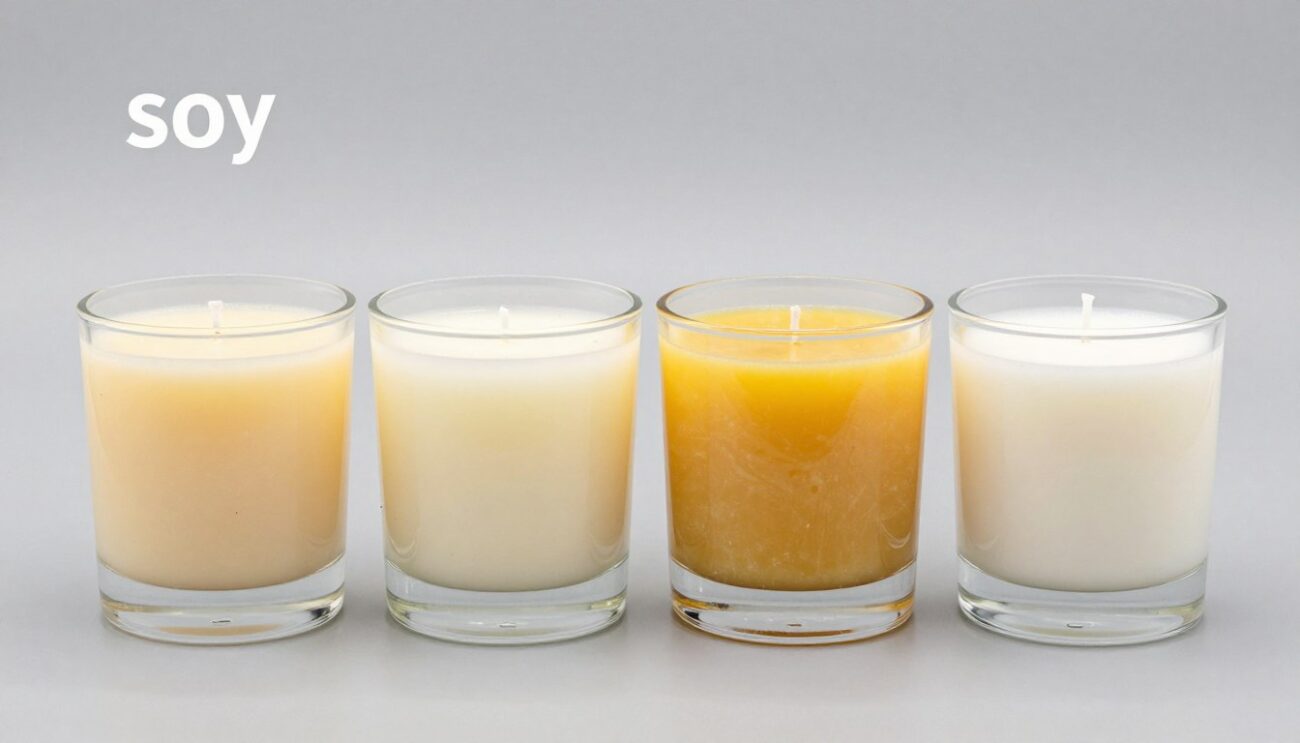
| Wax Type | Source | Burn Time | Scent Throw | Eco-Friendly | Price Point |
| Soy Wax | Soybean oil | Long (30-50% longer than paraffin) | Good to excellent | High (renewable, biodegradable) | Medium |
| Paraffin Wax | Petroleum by-product | Shorter | Excellent | Low (non-renewable, produces soot) | Low |
| Beeswax | Honeybee hives | Very long | Poor to fair | Medium-high (natural but limited supply) | High |
| Coconut Wax | Coconut oil | Very long | Excellent | High (renewable, sustainable) | High |
While each wax type has its advantages, soy wax offers an excellent balance of performance, sustainability, and affordability. Many professional candlemakers also create custom blends combining soy with other waxes like coconut or beeswax to achieve specific properties for different candle types.
Common Uses for Soy Wax
Container Candles
The most popular use for soy wax is creating container candles. Its excellent glass adhesion, clean burn, and ability to hold fragrance make it perfect for jar candles of all sizes. Soy container candles typically have a smooth, creamy appearance and provide an even burn pool.
Wax Melts & Tarts
Soy wax is ideal for creating scented wax melts used in warmers. These flameless alternatives to traditional candles release fragrance when heated, and soy’s excellent scent throw makes it a perfect choice. Soy wax melts typically last longer than paraffin varieties.
Natural Beauty Products
Beyond candles, soy wax is used in various beauty and skincare formulations. Its smooth texture and moisturizing properties make it excellent for lip balms, lotion bars, and massage candles. When used in beauty products, it creates a silky, non-greasy feel.
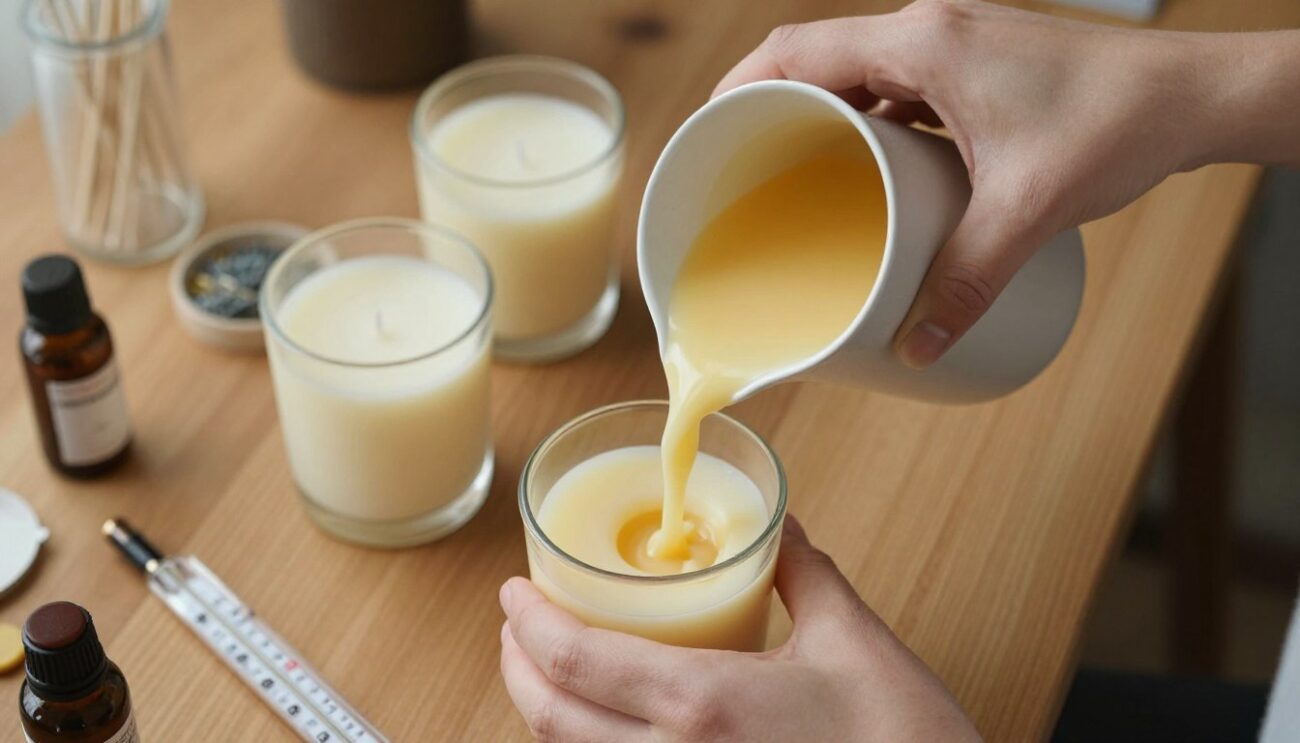
Soy wax is perfect for creating homemade container candles
Start Your Candle Making Journey Today
Our premium soy wax is perfect for beginners and experienced crafters alike. Get everything you need to create beautiful, eco-friendly candles.
Tips for Working with Soy Wax

Melting and Pouring
- Proper Melting Temperature: Heat soy wax to 185°F (85°C) to fully melt, but never exceed 200°F (93°C) to prevent discoloration.
- Use a Double Boiler: Melt soy wax using a double boiler or dedicated wax melter rather than direct heat to ensure even melting without scorching.
- Monitor Temperature: Use a reliable thermometer to track wax temperature throughout the process.
- Optimal Pouring Temperature: Pour between 125-135°F (52-57°C) for most container candles, though this may vary based on your specific wax blend.
- Pre-warm Containers: Slightly warming glass containers before pouring can improve adhesion and reduce “wet spots” where wax pulls away from the glass.
Adding fragrance oil at the correct temperature (175°F) ensures optimal scent throw
Adding Fragrance
Fragrance Load Tip: Most soy waxes can hold 6-10% fragrance oil by weight. For a 16oz (454g) candle, this means using approximately 0.96-1.6oz (27-45g) of fragrance oil.
- Add at the Right Temperature: Add fragrance oils between 175-185°F (79-85°C) for optimal binding with the wax.
- Stir Gently: Mix fragrance thoroughly but gently for 1-2 minutes to ensure even distribution without introducing air bubbles.
- Consider Flashpoints: Fragrance oils with higher flashpoints (denser oils) may require higher temperatures for proper incorporation.
- Test Different Percentages: Start with 6% fragrance load and adjust based on your specific oils and desired scent strength.
Troubleshooting Common Issues
Frosting
Those white crystal patterns that sometimes appear on soy candles are called “frosting.” This is a natural characteristic of soy wax and doesn’t affect performance.
Solutions:
- Experiment with different pouring temperatures
- Add 5-10% coconut wax to your soy blend
- Ensure slow, even cooling in a draft-free area
Wet Spots & Adhesion
Soy wax sometimes pulls away from container walls as it cools, creating “wet spots” or gaps between the wax and glass.
Solutions:
- Pre-warm containers before pouring
- Pour at a slightly higher temperature
- Maintain consistent room temperature during cooling
- Consider adding 2-5% coconut oil to improve adhesion
Frosting (left) is a natural characteristic of soy wax and doesn’t affect candle performance
Master the Art of Soy Candle Making
Get our premium soy wax and expert candle making guides to create perfect candles every time.
Sourcing and Sustainability
The environmental benefits of soy wax extend beyond its renewable nature and clean-burning properties. When sourcing soy wax, consider these sustainability factors:
What to Look For
- 100% Soy Content: Some “soy blend” waxes contain significant amounts of paraffin. Look for products labeled as 100% soy for maximum eco-benefits.
- Non-GMO Certification: If avoiding genetically modified organisms is important to you, seek out soy wax made from non-GMO soybeans.
- Country of Origin: Locally-sourced soy wax reduces carbon footprint from transportation.
- Sustainable Farming Practices: Some manufacturers provide information about their sourcing from farms using sustainable agricultural methods.
Environmental Impact
Choosing soy wax over paraffin creates significant environmental benefits:
- Reduced carbon emissions from renewable plant sources versus petroleum extraction
- Lower soot production means cleaner indoor air quality
- Biodegradable material that breaks down naturally if disposed of
- Supports agricultural communities rather than petroleum industry
- Spills clean up easily with soap and water instead of requiring chemical solvents
Look for sustainability certifications when purchasing soy wax products
Embrace the Natural Beauty of Soy Wax
Soy wax represents the perfect blend of performance, sustainability, and versatility for candle makers of all experience levels. Its clean-burning properties, excellent scent throw, and renewable nature make it an ideal choice for creating beautiful, eco-friendly candles that both you and your customers can feel good about.
Whether you’re just beginning your candle making journey or looking to switch to more sustainable materials, soy wax offers countless possibilities for creativity and customization. By understanding its unique properties and following the tips in this guide, you’ll be well-equipped to create stunning soy candles that burn cleanly, smell amazing, and support environmental sustainability.
Ready to Create Beautiful Soy Candles?
Explore our complete range of premium soy wax and candle making supplies to start crafting your own eco-friendly candles today.
Frequently Asked Questions About Soy Wax
Is soy wax really better for the environment than other waxes?
Yes, soy wax is more environmentally friendly than petroleum-based paraffin wax. It’s made from renewable soybeans, is biodegradable, produces less soot when burning, and has a smaller carbon footprint. While beeswax is also natural, soy wax is considered vegan and doesn’t impact bee populations.
Why does my soy candle have white spots or a frosted appearance?
This is called “frosting” and is a natural characteristic of soy wax. It occurs due to the crystallization of the vegetable oils in the wax as it cools. Frosting doesn’t affect the performance of your candle – it’s purely aesthetic. You can minimize it by controlling pouring temperature and cooling conditions, or by adding a small percentage of other waxes like coconut to your blend.
What’s the best temperature to add fragrance oil to soy wax?
For most soy waxes, the ideal temperature to add fragrance oil is between 175-185°F (79-85°C). This temperature ensures the wax molecules have fully expanded to properly encapsulate the fragrance molecules. Adding fragrance at too low a temperature can result in poor scent throw, while too high can cause the fragrance to flash off or burn.
How much fragrance oil should I add to soy wax?
Most soy waxes can hold between 6-10% fragrance oil by weight. For example, for a 16oz (454g) candle, you would use approximately 0.96-1.6oz (27-45g) of fragrance oil. It’s best to start with the manufacturer’s recommended percentage for your specific wax and adjust based on testing results and the strength of your particular fragrance oils.
Can I use soy wax for pillar candles?
There are specialized soy wax blends formulated with natural hardeners that work well for pillars. Alternatively, you can create your own blend by adding a small percentage of beeswax or palm wax to increase hardness. For beginners, soy wax is best used in container candles until you gain more experience with wax blending.