


Water Lily Candle Perfume (Fragrance Oil)

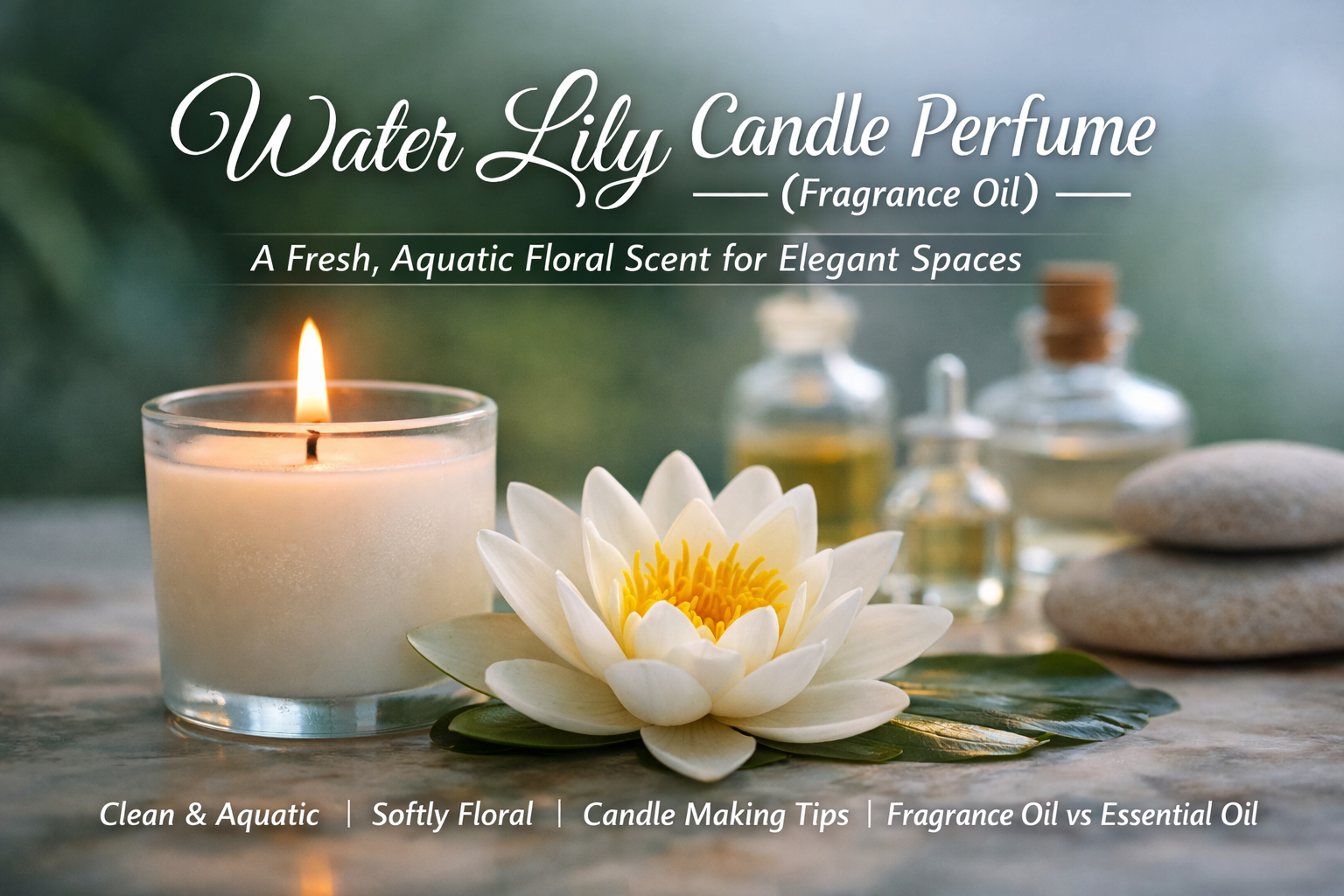
A Fresh Floral That Doesn’t Try Too Hard
Not every fragrance needs to be bold.
Some scents walk into a room loudly. Vanilla. Coffee. Cinnamon. They announce themselves.
Water lily doesn’t.
And that’s exactly why I respect it.
When I first started working with Water Lily Candle Perfume (Fragrance Oil), I expected something more floral-heavy. But what I got was cleaner. Lighter. Almost airy. It reminded me of still water early in the morning — soft light, no noise, just quiet clarity.
If you’re choosing fragrance oils for candle making, this one deserves serious attention.
What Water Lily Fragrance Oil Really Smells Like
Let’s clear something up.
Water lily is not a sharp floral. It’s not powdery like rose. It’s not sweet like jasmine. It sits somewhere between floral and aquatic freshness.
A good water lily fragrance oil usually carries:
- A light watery top note
- A soft floral heart
- Slight green undertones
- A clean finish that feels spa-like
It’s subtle. And subtle is harder to execute well than strong scents.
I’ve seen beginners say, “It’s too mild.” Then they overcompensate with high fragrance load. That’s where problems start.
Water lily needs balance.
Why It Works Beautifully in Candles
Here’s something you only really notice after testing multiple batches.
Aquatic florals behave differently in wax.
When you pour a candle using Water Lily Candle Perfume (Fragrance Oil), the cold throw might feel gentle. Don’t judge it too quickly. Let it cure properly. Once burned, the warm throw develops in layers.
First comes freshness. Then the floral softness spreads slowly through the room.
It doesn’t dominate the air. It refines it.
That’s why this scent performs well in:
- Bedrooms
- Spa environments
- Minimalist living rooms
- Luxury bathrooms
- Boutique hotel-style spaces
If your customer prefers “clean and fresh” over “strong and sweet,” water lily usually wins.
A Practical Tip Most People Skip
Timing matters.
When adding fragrance oil to melted wax, temperature control is critical. Too hot and you risk scent evaporation. Too cool and binding weakens.
If you want a deeper understanding of fragrance binding and scent throw performance, I always recommend reviewing proper mixing techniques like this guide on how to add fragrance to wax the right way for better scent throw choosing the right wax for candle making .
Small technical corrections can dramatically improve results.
And if you’re still experimenting with wax types, it helps to understand the base you’re working with. Different waxes hold aquatic florals differently.
Understanding perfume oils and fragrance oil composition
This breakdown on choosing the right wax for candle making choosing the right wax for candle making
is something I often suggest beginners read carefully.
Wax and fragrance compatibility is not guesswork. It’s chemistry.
Fragrance Oil vs Essential Oil — A Quick Reality Check
People often ask me if they should use essential oil instead of fragrance oil for water lily candles.
Here’s the honest answer: water lily essential oil isn’t practical for candle making at scale. Fragrance oils are specifically formulated for stability, consistency, and performance in wax.
If you’re curious about how fragrance oils differ from essential oils in application and scent strength, you can explore this broader explanation here:
For candle makers, performance matters more than theory.
Who Should Use Water Lily in Their Product Line?
This scent is not for bold, festive collections.
It’s for:
- Luxury minimalist brands
- Summer collections
- Wellness-focused candle lines
- Spa and relaxation themes
- Customers who say, “I don’t like heavy fragrances.”
I’ve noticed something interesting over the years. Strong scents attract attention. Soft scents build loyalty.
Water lily builds loyalty.
Blending Advice (From Experience)
If you plan to blend it, be careful.
Water lily pairs beautifully with:
- White musk
- Bamboo
- Light citrus
- Green tea
- Soft vanilla
But keep the supporting notes restrained. If you overpower it, you lose that signature airy feel.
Sometimes restraint creates elegance.
The Emotional Effect
Lighting a water lily candle feels different from lighting a dessert fragrance.
There’s something psychologically calming about aquatic florals. They feel breathable.
In today’s overstimulated environments.
Final Thoughts
Water Lily Candle Perfume (Fragrance Oil) isn’t dramatic. It doesn’t try to impress.
For serious candle makers, it’s a strategic scent. For home users, it’s a daily calm ritual. And for brands building a refined identity, it’s a subtle signature worth exploring.
Sometimes the most memorable fragrances are the ones that don’t compete for attention.
They simply belong. 🌿🕯️