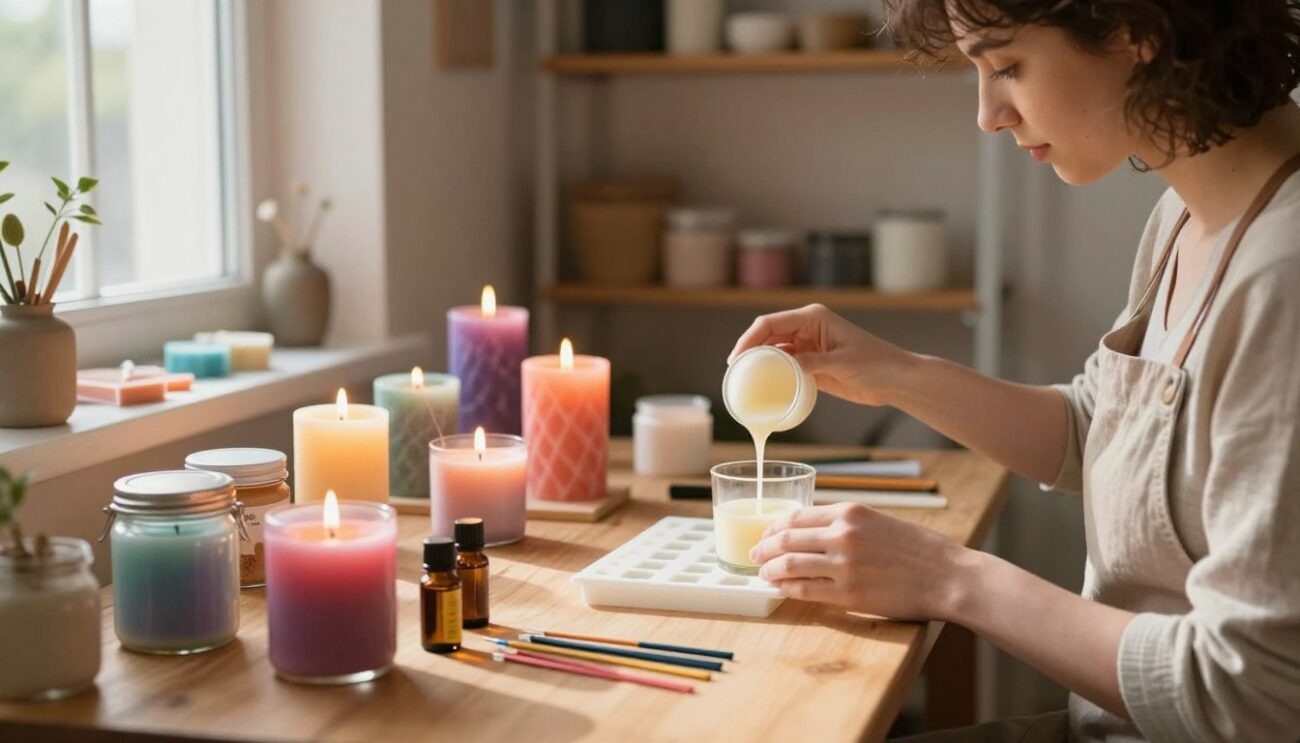
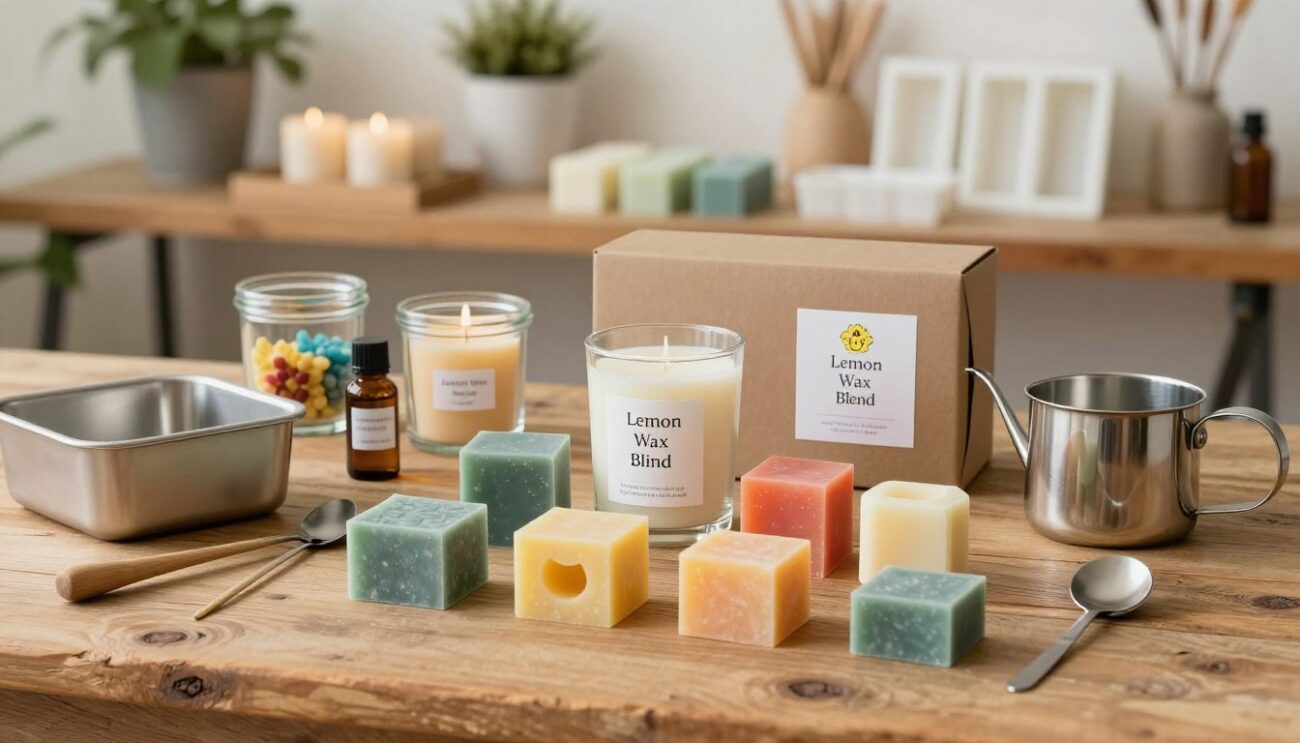
Essential Raw Materials Required to Start a Candle Making Business from Home

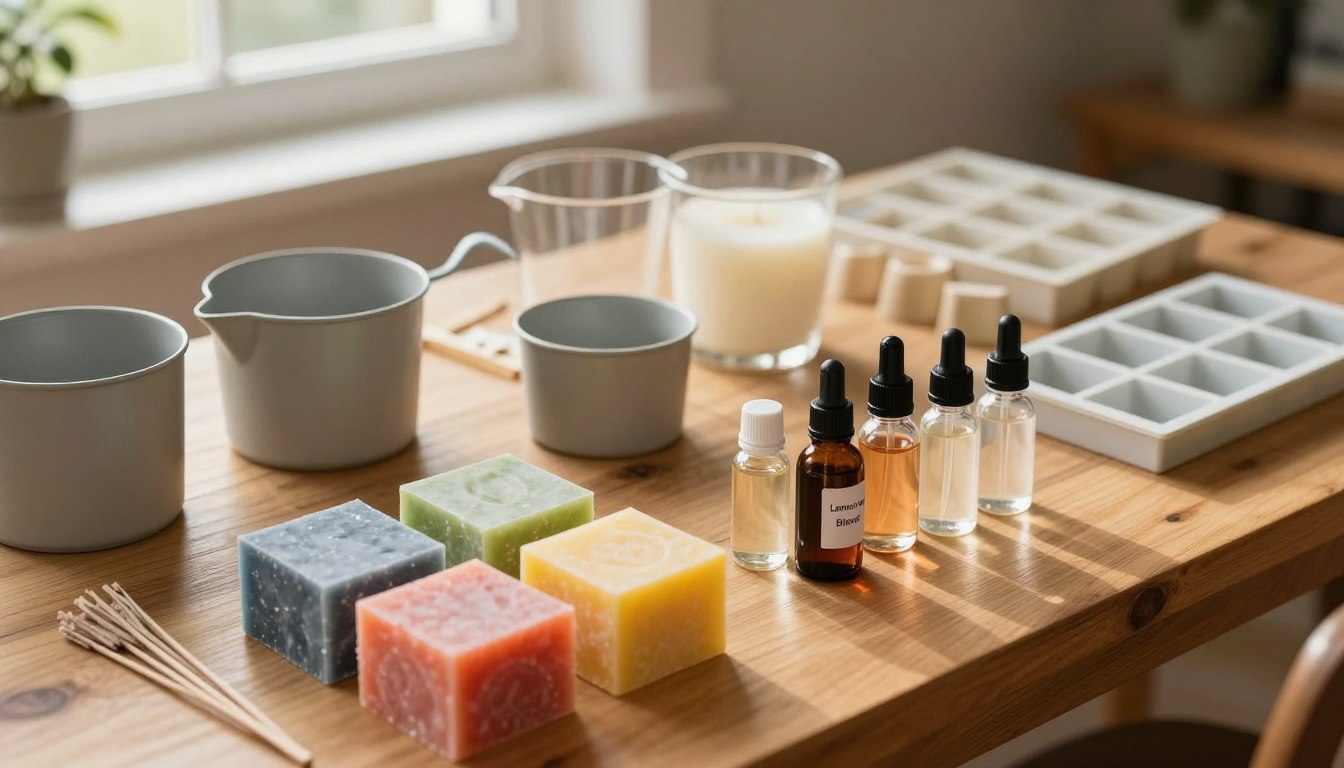
Starting a candle-making business from home can be rewarding. But you need to know the key supplies for making quality candles. As a beginner, it’s important to stick to the basics and save money.
The right candle-making ingredients are key to quality candles. They affect how well your candles work, their safety, and what customers think. We’ll look at the basic candle-making supplies you need to start a candle business.
Knowing what each material does helps you make candles that customers will love. Picking the right supplies from the start makes starting your candle business easier.
Key Takeaways
- Understanding the essential candle-making supplies is key to quality candles.
- The right ingredients affect how well candles work, their safety, and what customers think.
- Sticking to the basics saves money for beginners.
- Choosing the right wax, wicks, fragrance oils, and containers is essential.
- Quality candles meet customer expectations and improve your business’s reputation.
Getting Started with Candle Making Materials
Quality materials are key for a successful candle-making business. It’s important to know what to choose. When you start, the wide range of candle-making equipment and supplies can be overwhelming.
Why Quality Materials Matter for Your Business
High-quality candle-making wax and materials affect your candles’ burn, look, and customer satisfaction. Choosing the right candle-making kit with essential supplies ensures your products meet customer expectations.
Essential vs. Optional Supplies for Beginners
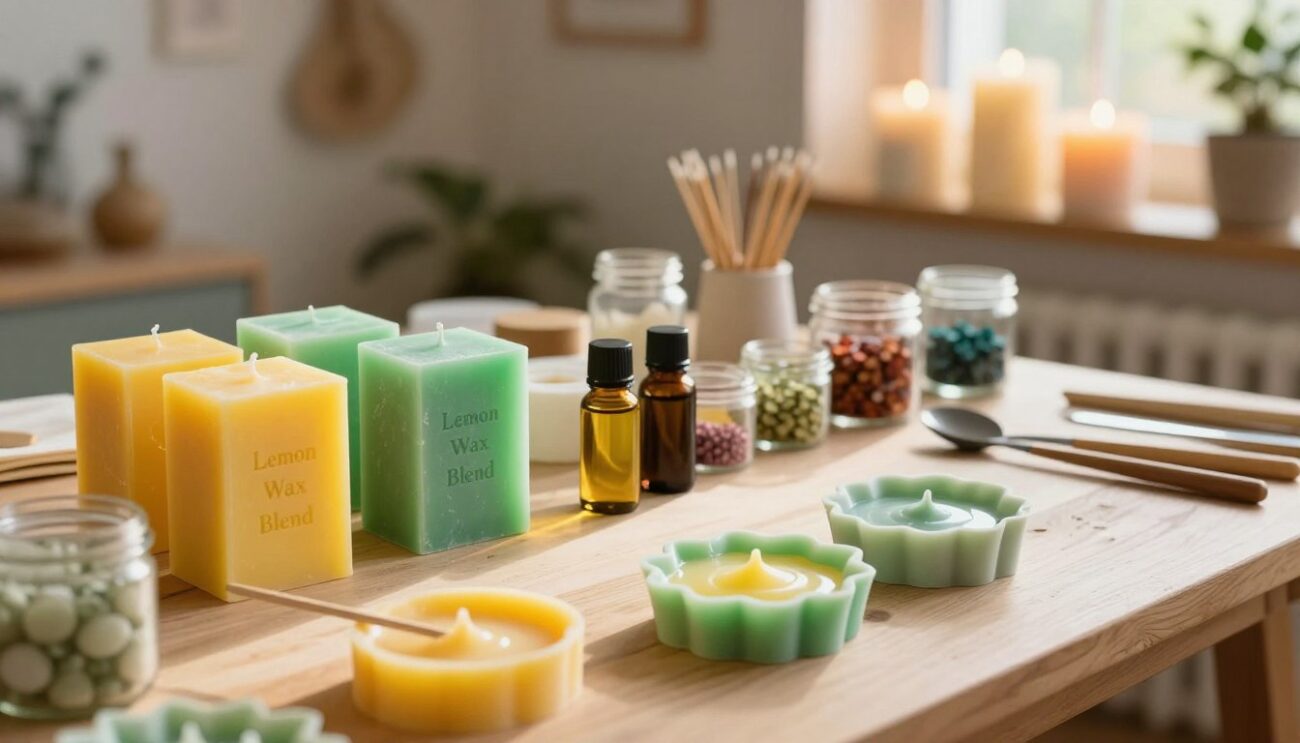
For beginners, knowing the difference between essential and optional supplies is vital. Essential supplies include wax, wicks, melting equipment, and fragrance oils. Optional supplies might include decorative items or special coloring agents.
- Wax: The base of any candle, available in types like soy, beeswax, and paraffin.
- Wicks: The right size and material are key for even burning.
- Melting Equipment: Double boilers or wax melters are needed for safe wax melting.
Different Types of Wax for Candle Making
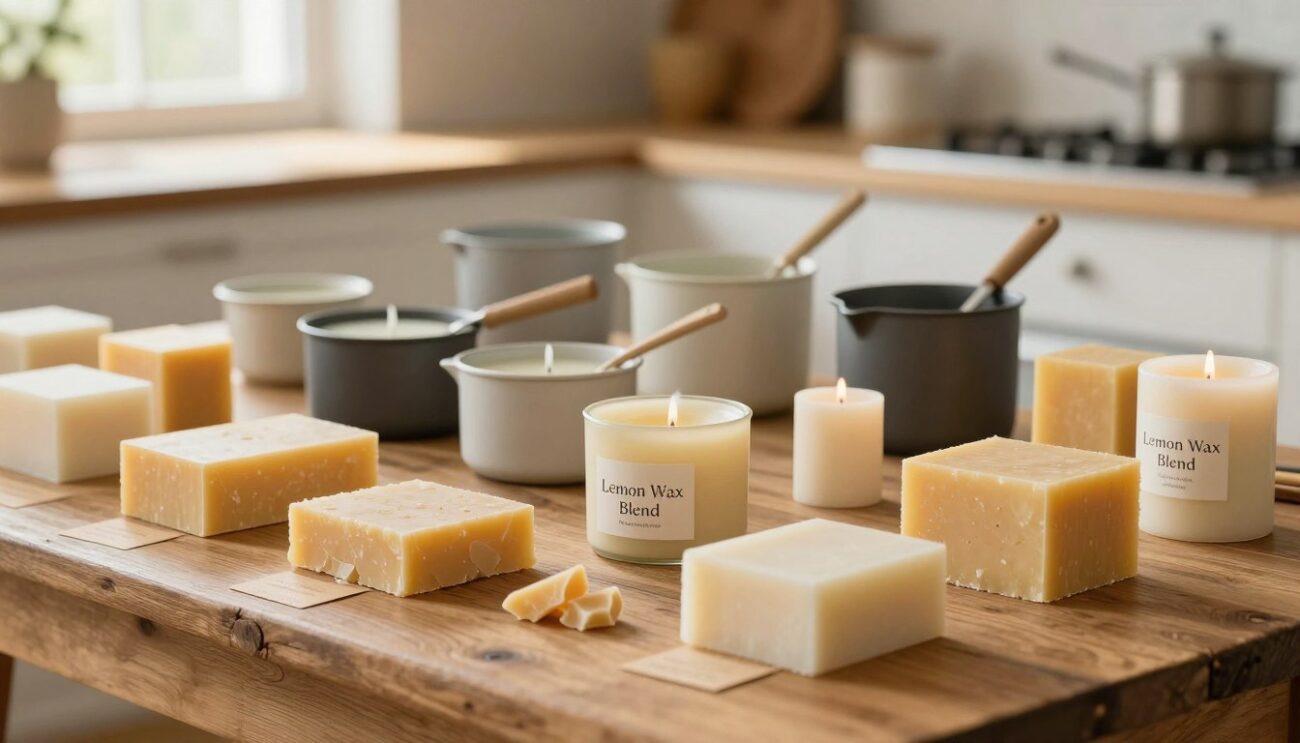
Knowing the properties of various waxes is key to making great candles. The wax type greatly impacts the candle’s performance, safety, and quality. Candle-making wax has many types, each with unique features.
Container Wax: Properties and Best Uses
Container wax is made for container candles. It melts at a lower temperature, ensuring even burning. It’s perfect for candle-making supplies meant for container candles.
Pillar Wax: When and How to Use It
Pillar wax is for making pillar candles. It has a higher melting point, ideal for freestanding candles. Its stability and durability make it a favorite among candle makers.
Soy, Beeswax, and Paraffin: Pros and Cons
Soy wax is eco-friendly, being renewable and biodegradable. Beeswax offers a natural scent and is used in luxury candles. Paraffin wax is affordable but has a bigger carbon footprint than soy wax.
Testing Wax Quality Before Bulk Purchase
Testing wax quality is essential before buying in bulk. Check its melting point, hardness, and burn time. This ensures you get the best wax for your candles, vital for quality candle-making supplies.
Selecting the Right Wicks for Your Candles
Wicks are key in candle making, impacting both burn quality and safety. The correct wick leads to a clean, even burn. But, a wrong choice can cause soot, uneven burning, or even fire hazards.
Understanding Wick Sizes and Materials
Wick sizes and materials differ, and knowing these is vital for great candle performance. Wick sizes vary from fine to large. Materials can be cotton, paper, or synthetic. The size and material of the wick influence how the candle burns.
Larger wicks are often used for bigger candles. Smaller wicks are better for container candles.
How to Match Wicks to Different Wax Types
Different waxes need different wick sizes and materials. For instance, soy wax usually needs a bigger wick than paraffin wax. Matching the wick to the wax type is key to the best burn quality.
This prevents tunneling or too much soot.
Common Wicking Mistakes to Avoid
Using a wick that’s too big or too small is a common mistake. It can cause poor burn quality, soot, or safety risks. Knowing how to match wicks to wax types and avoiding these errors helps make high-quality candles.
These candles burn evenly and safely.
Essential Fragrance Oils and Scent Blending
To make candles that smell great, you need to know about fragrance oils. These oils are key for any candle business. They give the scents that customers love.
Quality Considerations for Fragrance Oils
Quality is key when picking fragrance oils for candles. Good oils make the scent strong and steady. They also help avoid problems with the candle’s stability. Always buy from trusted suppliers who show you test results and documents.
Popular Scents for the Indian Market
In India, people like different scents. Sandalwood and jasmine are favorites. They match the area’s culture and tastes. Knowing this helps make candles that people will love.
Calculating the Right Fragrance Load
Finding the right amount of fragrance is important. It makes the scent strong without hurting the candle. Use 6% to 12% fragrance, based on the wax type.
- Soy wax needs less fragrance.
- Paraffin wax can take more.
Storing Fragrance Oils Properly
Keeping fragrance oils in the right place is important. Store them in a cool, dark spot. Keep them away from sunlight and heat. Use tight containers to stop them from getting damaged.
Candle Dyes and Colorants: Creating Visual Appeal
Candle dyes and colorants are key to making candles look great. The right color can make your candles feel special. It can also help them stand out in the market.
Types of Candle Colorants Available in India
In India, there are many colorants to choose from. You can pick from dye chips, powders, and liquids. Dye chips make colors even, powders let you adjust intensity, and liquids offer a wide range of hues.
Color Mixing Techniques for Beginners
Learning to mix colors is important for creating unique shades. Begin with primary colors to build your palette. Mixing colors in small batches helps you make adjustments and keep colors consistent.
“The art of color mixing is about experimentation and understanding how different colors interact.”
Testing Colorfastness and Stability
It’s important to test how colors hold up over time. Make sample candles with different colors and see how they react to light and heat. Regular testing ensures your candles stay vibrant and appealing.
Knowing how to use different colorants can make your candles both fragrant and beautiful. This can help grow your candle-making business.
Raw Materials Required to Start a Candle Making Business: Tools and Equipment
Starting a candle-making business needs the right tools and equipment. The right candle-making equipment is key to making high-quality candles. We’ll look at the essential tools and equipment you need to start.
Melting Equipment: Double Boilers and Wax Melters
Melting wax to the right temperature is key in candle making. Double boilers and wax melters are great for this. Double boilers offer gentle heat, while wax melters have precise temperature control.
Measuring Tools for Accuracy and Consistency
Measuring tools are important for accuracy and consistency. You’ll need thermometers and scales to measure wax and fragrance oils. This ensures the perfect blend and avoids waste.
Pouring and Safety Equipment
Pouring hot wax needs care and the right tools. You’ll need pouring pots and heat-resistant gloves for safe handling. This equipment prevents accidents and makes the candle-making process smoother.
Budget-Friendly Alternatives for Beginners
As a beginner, you don’t need to spend a lot on equipment. There are budget-friendly alternatives that work well. Start with basic double boilers and simple measuring tools. Then, upgrade as your business grows.
Containers and Packaging Materials
Starting a candle-making business means picking the right containers and packaging materials. They must be safe and look good. Containers should handle the heat from the candle flame. Packaging should keep the candle safe during shipping and storage.
Selecting Safe Containers for Different Candle Types
Each candle type needs its own container. For instance, container candles need special containers like glass jars or metal tins. These must be heat-resistant and hold the wax and fragrance oils.
Packaging Solutions for Home Businesses
Home-based candle makers need packaging that works well and looks nice. This includes labeling, boxes, and bags. They protect your candles when shipping and storing.
Sourcing Affordable Containers in India
Finding affordable containers in India is easy with local suppliers or online stores. It’s key to compare prices and quality. Look at material, size, and design when picking containers.
Labeling Requirements and Materials
Labeling is vital for packaging. It tells customers about the candle, like its scent and how long it burns. You must follow local rules on labeling. Choose materials that last and are easy to use.
Conclusion: Building Your Candle Making Inventory
Starting a candle-making business needs a deep understanding of the key materials. You must know the right ingredients and tools to make quality candles. This way, you can meet your customers’ needs.
It’s important to start small and test your products. Using reliable equipment helps avoid mistakes and boosts your confidence. Quality materials like wax, wicks, and fragrances are also key to making great candles.
When building your inventory, look for affordable and safe containers and packaging. Following these steps and improving your skills will help you grow a successful candle-making business in India.