Candle Wax Selection Guide for Beginners: Understanding Container Wax vs Pillar Wax

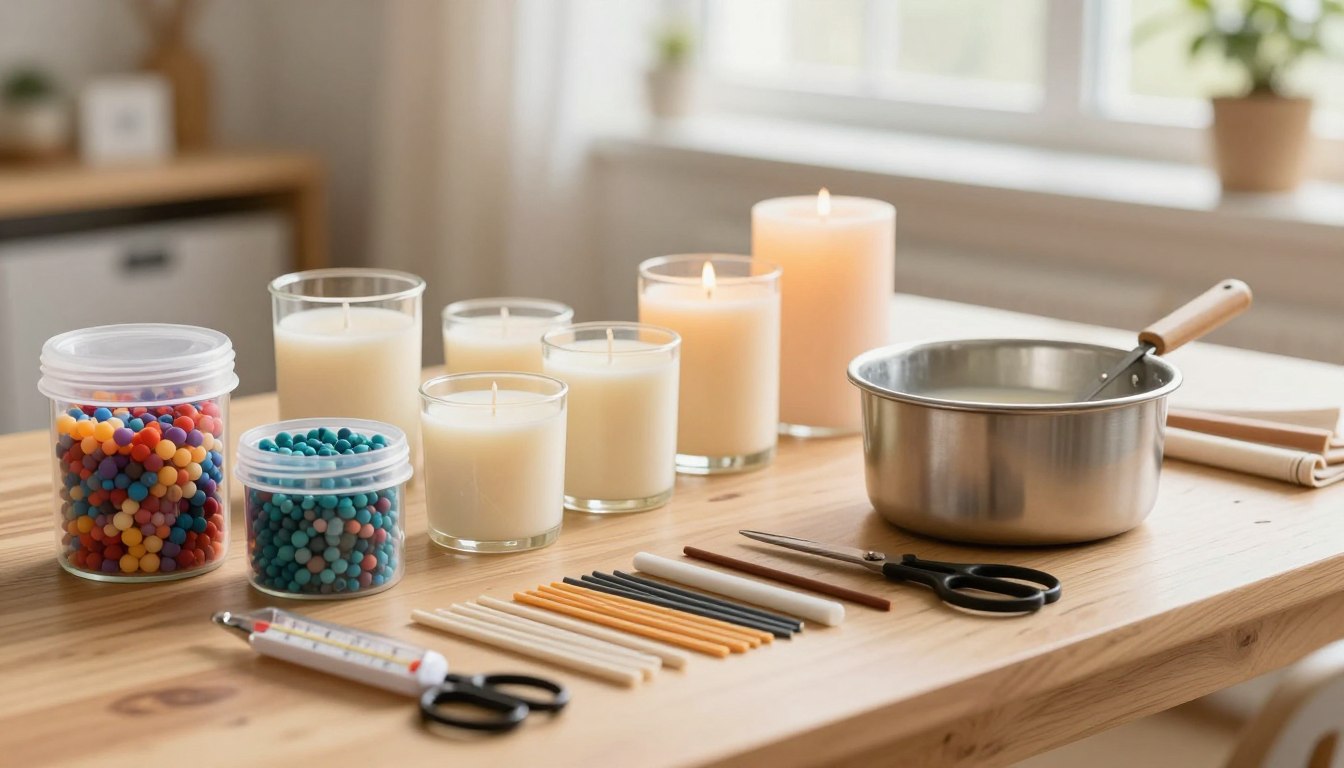
Starting your candle making journey means making a key choice: the wax type. The wax you pick affects your candle’s quality, safety, and how well it works. This choice is important whether you’re making candles for yourself or as presents.
For newbies, knowing the difference between container wax and pillar wax is key. Each wax is made for different candle types. Picking the right one is vital for getting the look and feel you want.
We’ll cover the basics of container wax and pillar wax. This will help you make smart choices as you begin making candles.
Key Takeaways
- Understanding the difference between container wax and pillar wax is key for beginners.
- The right wax choice affects candle performance and safety.
- Container wax is for container candles, while pillar wax is for freestanding ones.
- Choosing the correct wax ensures the best burn time and quality.
- Beginners should think about their candle making project’s specific needs.
The Basics of Candle Wax Types
Candle wax is more than just a simple material. It’s the heart of candle making, with each type bringing its own benefits. The wax type greatly impacts the candle’s burn time, stability, and look.
What Makes Candle Wax Different?
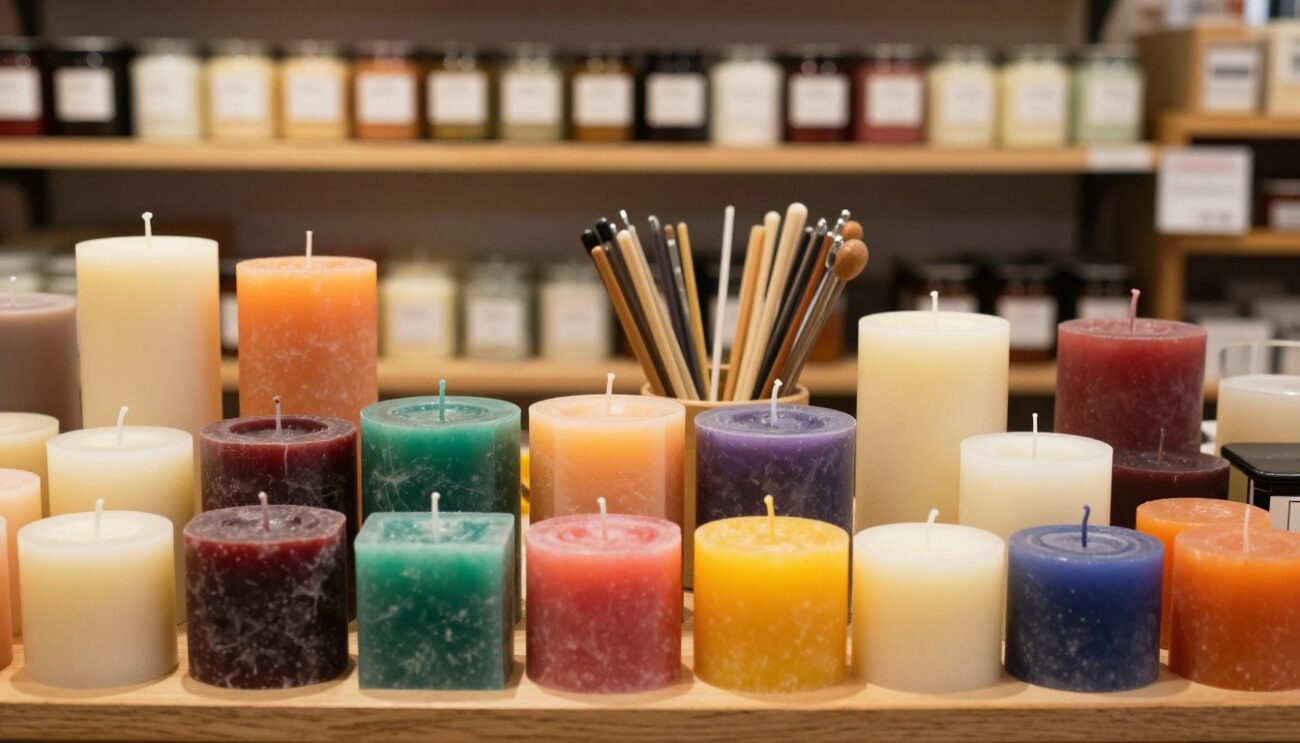
Different waxes have unique chemical makeup, melting points, and hardness. Paraffin wax is popular for being affordable and easy to find. Soy wax and beeswax are chosen for their natural and eco-friendly qualities. Each wax has special traits that fit certain uses.
Experts say, “The wax you choose can make or break your candle’s quality.” This shows how vital it is to know about the various waxes and their features.
Key Properties to Consider When Selecting Wax
When picking wax for candle making, consider a few key things. These include:
- Melting point: It affects the candle’s burn temperature and stability.
- Hardness: It impacts the candle’s durability and shape.
- Burn time: It varies based on the wax type and mix.
- Environmental impact: Think about eco-friendly and sustainable options.
Knowing these properties helps us choose the best wax for our candles. “Picking the right wax is key for the quality and performance of your candles,” say seasoned candle makers.
Container Wax vs Pillar Wax: Understanding the Fundamental Differences
When making candles, knowing the difference between container wax and pillar wax is key. Each wax type has unique properties for specific uses.
Container Wax: Properties and Characteristics
Container wax is made for candles in containers. It melts at a lower point, which helps it pool right. It’s a mix of waxes like soy and paraffin for the best results. Container wax’s main features are:
- A lower melting point to avoid overheating and ensure a smooth burn.
- Sticks well to container walls, preventing separation or cracking.
- Creates a consistent burn pool for better fragrance throw.
Pillar Wax: Properties and Characteristics
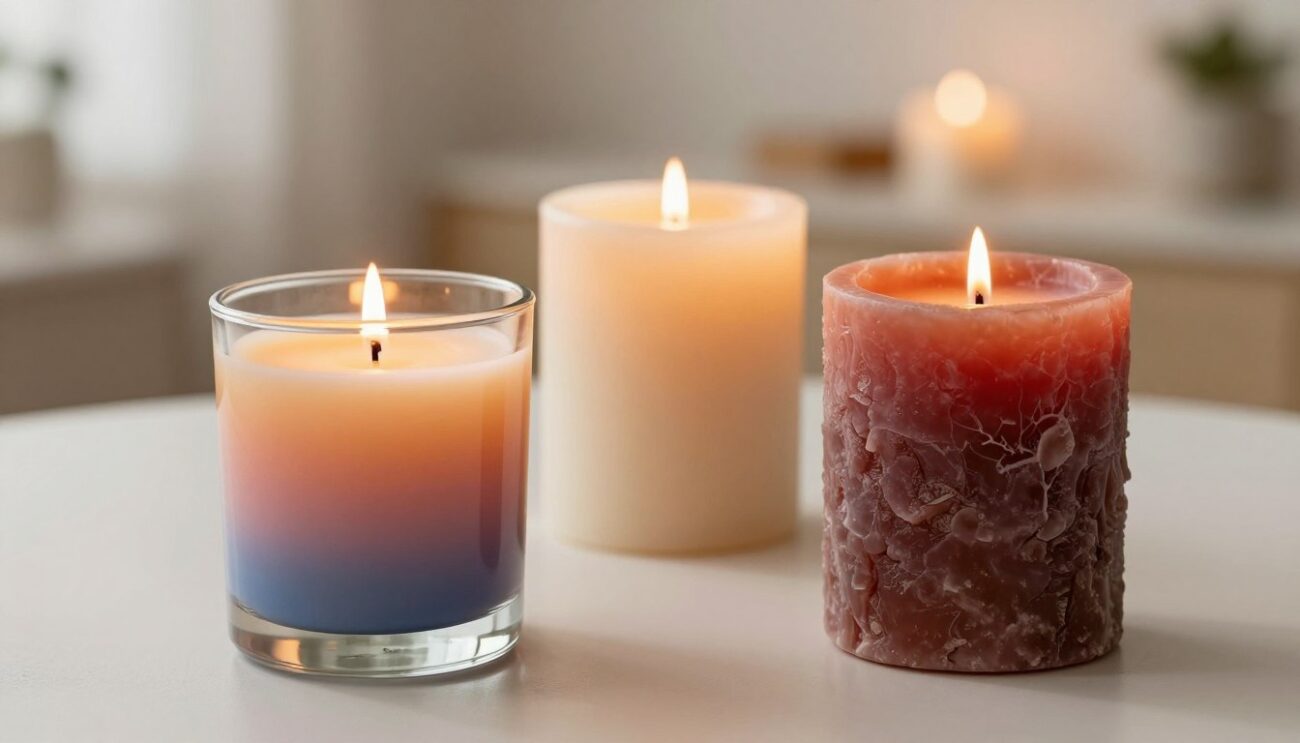
Pillar wax is for freestanding pillar candles. It’s firmer and melts at a higher point than container wax. This keeps its shape when lit. Pillar wax is often paraffin or blends for stability. Pillar wax’s key traits are:
- A higher melting point to keep its shape and prevent melting.
- Is hard and stable, keeping the candle upright and burning evenly.
- Burns consistently and cleanly, important for efficient burning.
Side-by-Side Comparison of Both Wax Types
To grasp the differences, here’s a comparison of container wax and pillar wax:
| Property | Container Wax | Pillar Wax |
|---|---|---|
| Melting Point | Lower | Higher |
| Hardness | Soffer | Firmer |
| Application | Container Candles | Freestanding Pillar Candles |
Knowing these differences helps you choose the right wax for your candles. This ensures your candles meet your quality and performance standards.
Choosing the Right Wax for Your Candle Project
The wax you pick for your candle project really matters. It affects how good the candle will be. Different waxes are needed for different candle types.
When to Use Container Wax
Container wax is best for candles that burn in a container. It sticks well to the container, preventing tunneling. Container wax is softer and melts at a lower temperature, perfect for even melting in containers.
Use container wax for modern candles or special containers. It works great for these.
When to Use Pillar Wax
Pillar wax is for candles that stand alone, without a container. It’s harder and more durable than container wax. This makes it perfect for freestanding pillar candles.
Pillar wax is great for making traditional or decorative pillar candles. These candles are often used as centerpieces.
Hybrid and Specialty Waxes for Specific Projects
Container and pillar wax meet many needs, but some projects need specialized waxes. Hybrid waxes mix different wax benefits, making them versatile for many designs.
Specialty waxes are for specific uses, like wax melts or candles with special fragrances. They can improve scent throw or burn times. They also have unique melting points for certain projects.
For unique candle projects, think about using hybrid or specialty waxes. They help get the best results and quality.
Common Beginner Mistakes and How to Avoid Them
Candle making can be tricky, but knowing what to avoid helps a lot. As you start making candles, knowing common mistakes can make your experience better. It helps you make better candles and enjoy the process more.
Using the Wrong Wax Type and Its Consequences
Choosing the right wax is key in candle making. The wrong wax can cause problems like poor burn quality and uneven melting. For example, using pillar wax in a container candle can cause it to crack or separate.
On the other hand, using container wax for a pillar candle might make it warp or collapse. It’s important to know the properties of different waxes, like container candle making waxes, to get the right results.
The Importance of Testing Small Batches
Testing small batches is a step many beginners skip. Making small batches lets you test the quality of your wax and melting temperatures. It also helps you see how your candle performs without wasting a lot of material.
This practice helps you find and fix problems early on. It’s a simple way to make sure your final product is what you want.
Troubleshooting Wax Issues: Cracking, Shrinkage, and Poor Burning
Even with the best efforts, problems like cracking, shrinkage, and poor burning can happen. Cracking often comes from wax cooling too fast or unevenly. To avoid this, let your candles cool slowly and keep them away from drafts.
Shrinkage can be lessened by using the right wax and not melting it too high. Poor burning can be caused by many things, like the wax type, wick size, and burning conditions. Finding and fixing these issues takes patience and a careful approach.
“The art of candle making is not just about following a recipe; it’s about understanding the materials and processes involved.”
Sourcing Quality Wax Materials in India
In India, finding good wax materials can be hard. Look for trusted suppliers of candle making supplies who give detailed info about their products. Reading reviews and asking for samples before buying a lot is also smart.
Getting high-quality materials makes a big difference in your candle’s quality. By knowing these tips, you can improve your candle-making skills and make candles you’re proud of.
Conclusion
Choosing the right wax for candles is key to making high-quality ones. It’s important to know the difference between container wax and pillar wax. The best wax depends on your project’s needs, like the candle type, burn time, and texture.
Container wax is great for container candles. It burns smoothly and has a strong scent. Pillar wax is better for freestanding candles. It gives them the stability they need.
Knowing how each wax works helps you make better candles. Whether you’re new or experienced, picking the right wax is vital. It ensures your candles burn well and look good.